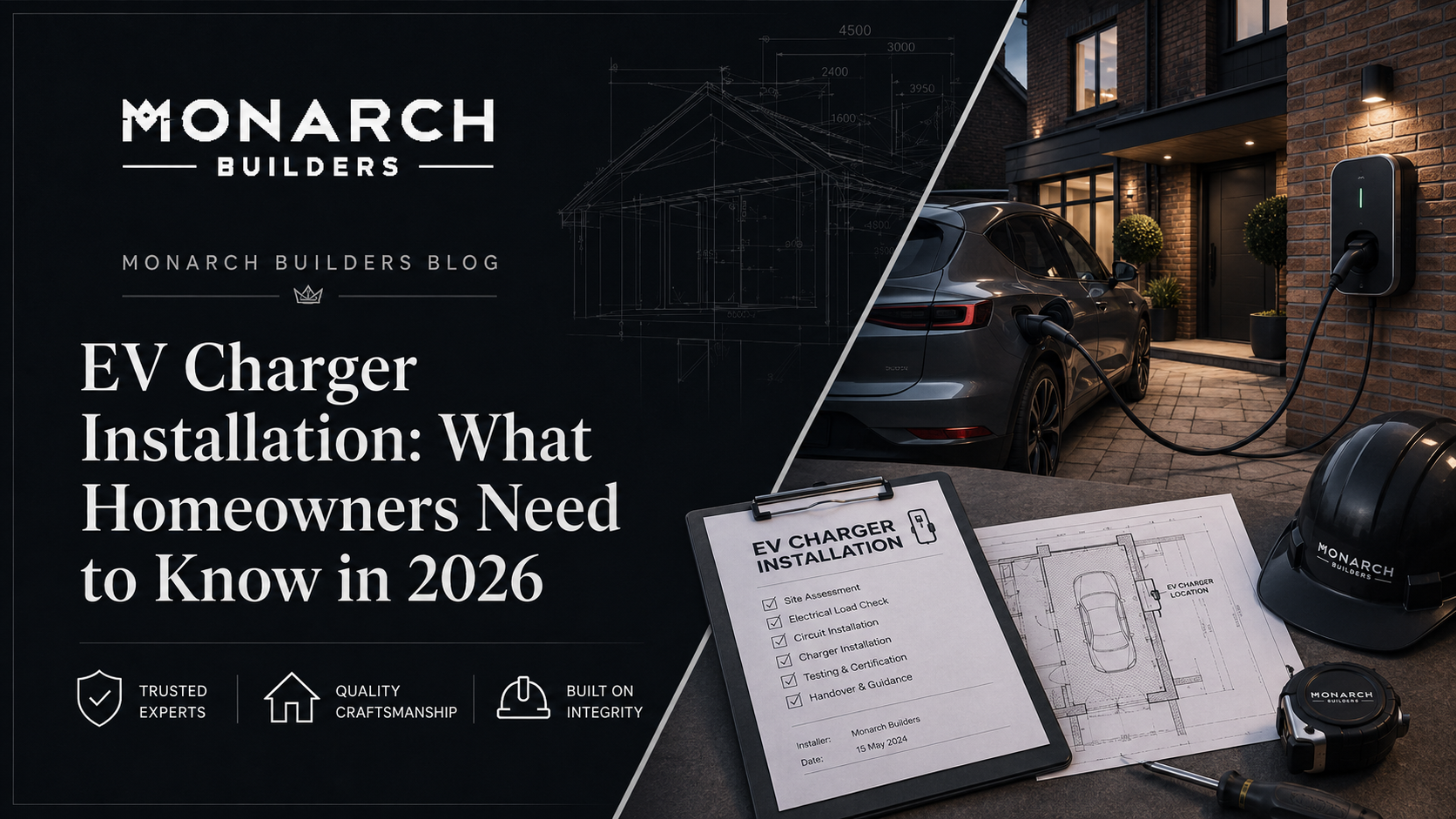
Home Charging Has Become the Norm, Not the Exception
With more electric and plug-in hybrid vehicles on Kent's roads every year, a home charger has gone from a novelty to something most EV owners consider essential from day one. Charging overnight on a home unit is almost always cheaper and more convenient than relying on public chargers, but the installation itself involves a few decisions worth understanding before you book anyone in.
Tethered or Untethered?
A tethered charger comes with a cable permanently attached, so you simply plug straight into the car — slightly more convenient day to day. An untethered unit has a socket instead, meaning you connect using your own cable, which offers flexibility if you ever change car and the connector type differs, or if you'd rather store the cable indoors between uses. Neither is objectively "better" — it comes down to personal preference and how the unit will be used.
What a Standard Home Installation Involves
Most UK homes run on a single-phase electricity supply, which supports a 7kW charger — enough to fully charge a typical EV battery overnight. A compliant installation includes:
- A dedicated circuit run from the consumer unit, sized correctly for continuous charging load
- Appropriate RCD (residual current device) protection, since chargers are treated as a notifiable Part P electrical installation
- An outdoor-rated enclosure if the unit is mounted externally, which is the case for most driveway and on-street parking setups
- Earthing arrangements assessed by the installer — some properties need additional earthing protection (a PEN fault protection device) depending on how the property is supplied, which any competent installer will check as standard
Grants and Incentives
Government support for home charger installation has changed several times over recent years, and eligibility depends on your circumstances — for example whether you live in a flat, rent your property, or qualify under current landlord/tenant schemes. Rather than quote figures here that may already be out of date by the time you read this, we'd always recommend asking your installer directly what support you currently qualify for — a properly accredited installer will know the live position and can factor it into your quote.
What to Expect on Installation Day
A straightforward domestic installation is usually completed within half a day. Your installer will confirm the best charger location (as close to where the car parks as practical, balanced against the length of cable run from your consumer unit), run the new circuit, mount and wire the unit, and test the full installation before handing over. You'll receive an electrical installation certificate confirming the work meets current wiring regulations — keep this safe, as it's often requested at resale.
Getting the Most From It Day to Day
Most modern home chargers support smart scheduling, letting you set charging to run during cheaper off-peak electricity hours if you're on a suitable tariff — worth setting up from day one rather than leaving on default settings. If solar panels are part of your setup or under consideration, some chargers can also prioritise using your own generated electricity before drawing from the grid, which is worth discussing at the quote stage if it's something you're planning.
Our Approach
We install and certify home EV chargers across Margate, Ramsgate, Broadstairs and the wider Thanet area, and we'll always give you a straight answer on what your property needs — rather than a one-size-fits-all quote. Get in touch and we'll talk through the right setup for your home and vehicle.